
数据结构中的单向链表
 Sarah Chen
 什么是单向链表?
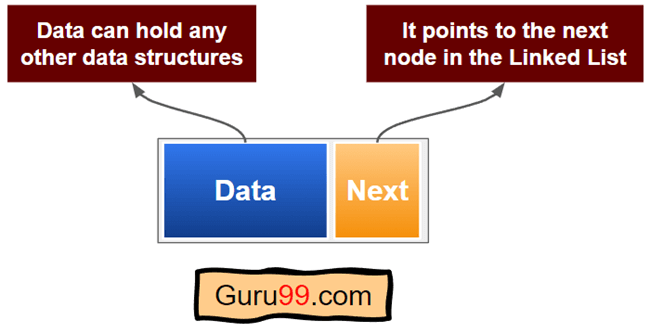
单向链表是一种线性、单向的数据结构,数据保存在节点中,每个节点通过链接指向下一个节点。每个节点包含一个数据字段和一个指向下一个节点的链接。单向链表只能朝一个方向遍历,而双向链表可以朝两个方向遍历。
这是单向链表的节点结构
为什么用链表而不是数组?
在某些情况下,使用链表比使用数组更好。以下是一些场景
- 未知元素数量:当您在程序运行时不知道需要存储多少元素时,您可以使用链表。内存会在您向链表中添加元素时动态分配。
- 随机访问:在您不需要对元素进行随机访问的情况下,您可以使用链表。
- 在中间插入:在数组中间插入是一项复杂任务,因为您需要将其他元素向右推移。但是,链表允许您将元素添加到任何您想要的位置。
单向链表的操作
单向链表非常适合动态分配内存。它提供了链表的所有基本操作,即插入、删除、搜索、更新、合并两个链表、遍历等。
在这里,我们将讨论链表的以下操作
- 头部插入
- 尾部插入
- 在节点后插入
- 在节点前插入
- 删除头节点
- 删除尾节点
- 搜索和删除节点
- 遍历链表
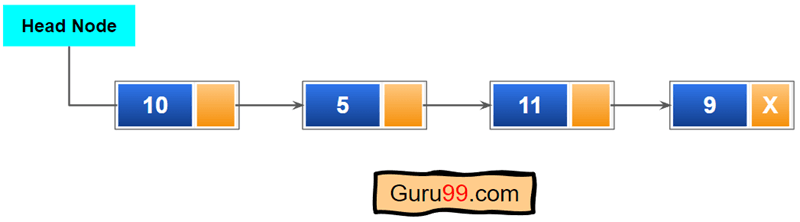
这是一个具有四个节点的链表示例。
在单向链表的头部插入
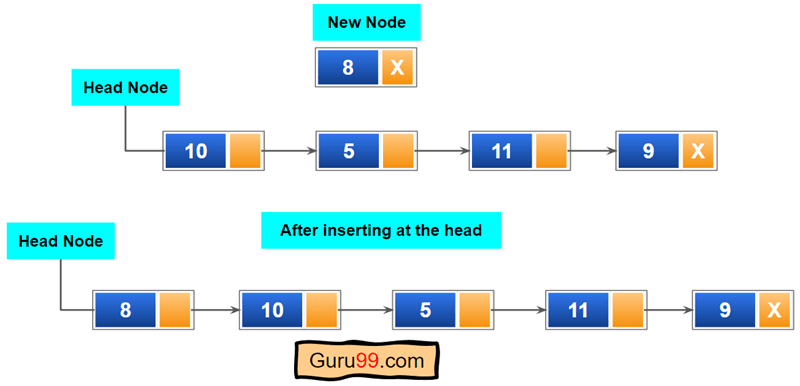
这是一个简单的操作。通常,它被称为“压入”单向链表。您需要创建一个新节点并将其放置在链表的头部。
要执行此操作,我们需要遵循两个重要条件。它们是
- 如果列表为空,则新创建的节点将是头节点,头节点的下一个节点将是“NULL”。
- 如果列表不为空,新节点将是头节点,下一个将指向前一个头节点。
这是在链表头部插入节点的伪代码
function insertAtHead( head, value ):
	newNode = Node(value)
	if head is NULL:
		head = newNode
		return head
	else:
		newNode.next = head
		return newNode
在单向链表的尾部插入
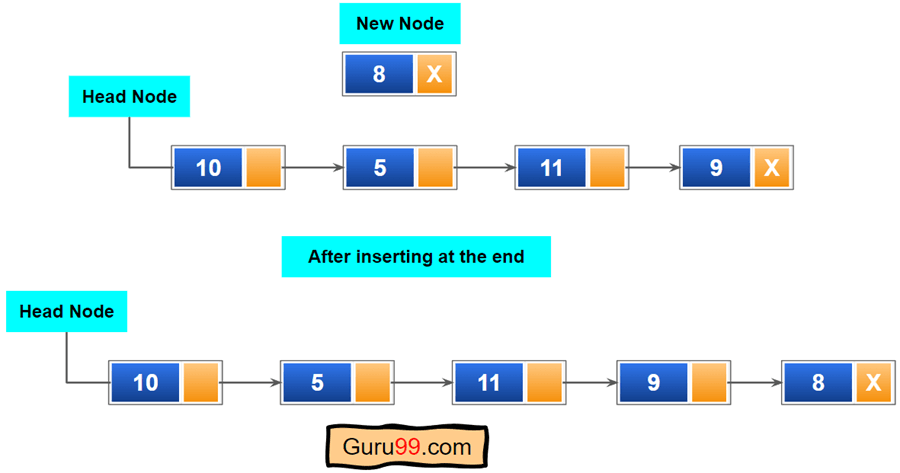
在链表末尾插入节点在某些方面与在头部插入相似。您需要做的就是遍历到最后一个节点或尾节点。然后将最后一个节点的“next”节点指向新创建的节点。如果头节点为 null,则新节点将是头节点。
以下是步骤
步骤 1) 遍历直到当前节点的“next”节点变为 null。
步骤 2) 创建一个具有指定值的新节点。
步骤 3) 将新节点指定为尾节点的下一个节点。
单向链表中在尾部插入节点的伪代码
function insertAtEnd( head, value ):
	newNode = Node(value)
	if head is NULL:
		head = newNode
		return head
	while head.next is not NULL:
		then head = head.next
	head.next = newNode
	newNode.next = NULL
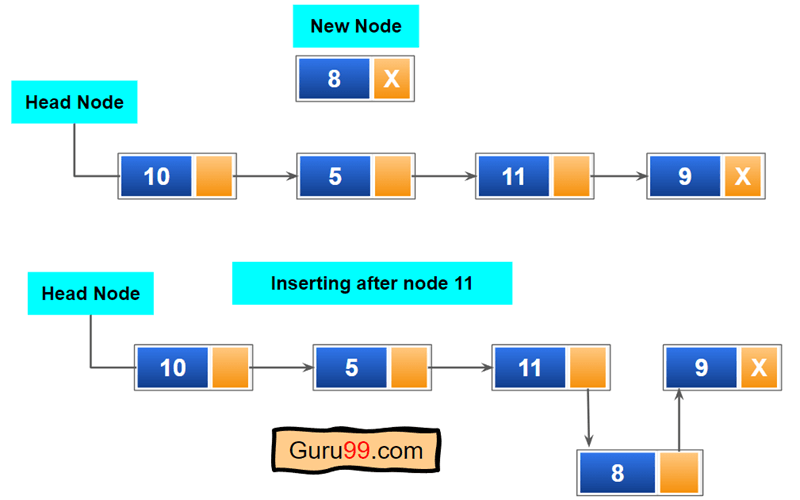
在节点后插入单向链表
在节点后插入包含两个部分:搜索节点并在找到的节点后附加。我们需要遍历所有节点。对于每个节点,我们需要将其与搜索的元素进行匹配。如果匹配,我们将新节点添加到搜索到的节点之后。
以下是步骤
步骤 1) 遍历下一个节点,直到当前节点的值等于搜索项。
步骤 2) 新节点的 next 指针将是当前节点的 next 指针。
步骤 3) 当前节点的 next 节点将是新节点。
这是在节点后插入节点的伪代码
function insertAfter( head, value, searchItem ):
	newNode = Node(value)
	while head.value equals searchItem:
		then head = head.next
	newNode.next = head.next.next
	head.next = newNode
在节点前插入单向链表
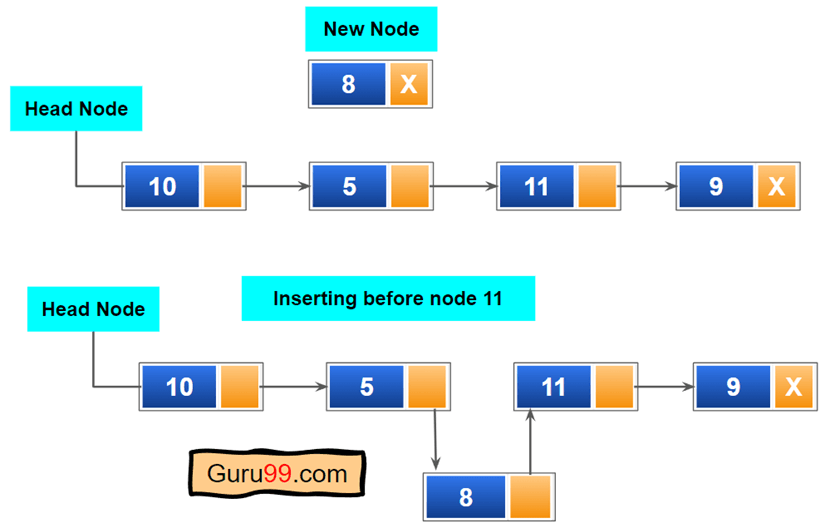
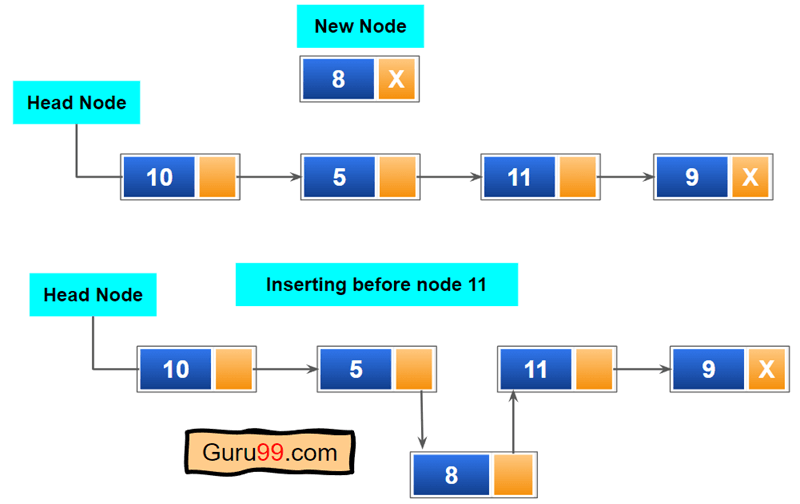
此函数与在节点后插入非常相似。我们必须创建一个新节点并遍历链表,直到当前节点与搜索节点匹配。之后,我们将新节点添加为当前节点的前一个节点。
以下是步骤
步骤 1) 遍历直到下一个节点的值等于搜索项。
步骤 2) 创建一个新节点,并将节点的“next”指向当前节点的下一个节点。
步骤 3) 将新节点指定为当前节点的下一个节点。
这是伪代码
function insertBefore( head, value, searchItem ):
	newNode = Node(value)
	while head.next.value equals searchItem:
		then head = head.next
	newNode.next = head.next.next
	head.next = newNode
删除单向链表的头节点
在链表的每个函数中,都将头指针作为参数提供。您需要删除头节点,并将头节点的下一个节点设为链表的新头。我们还需要释放已删除节点占用的内存。否则,当另一个程序尝试访问它时,内存将被标记为已占用。
以下是删除单向链表头节点的步骤
步骤 1) 将头节点的下一个节点指定为新头。
步骤 2) 释放前一个头节点分配的内存。
步骤 3) 返回新的头节点。
删除头节点的伪代码
function deleteHead( head ):
	temp = head
	head = head.next
	free( temp )
	return head
删除单向链表的尾节点
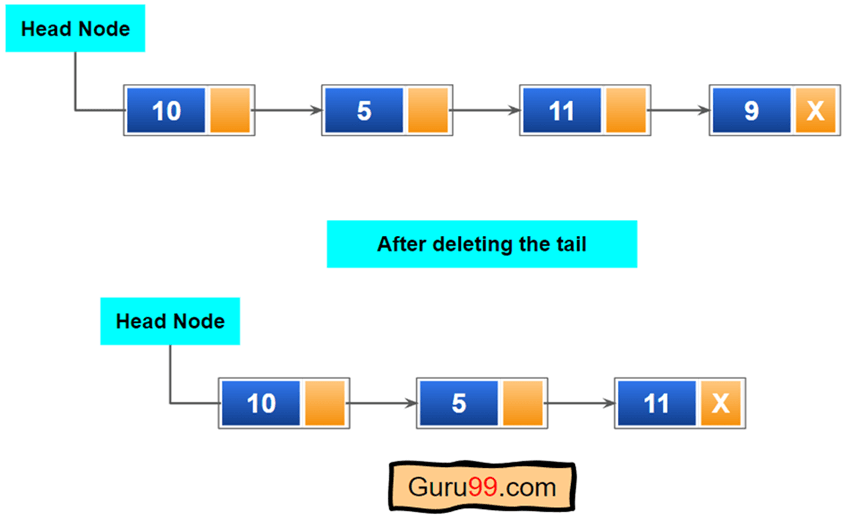
删除尾节点与删除头节点非常相似。区别在于我们需要遍历到链表的末尾并删除它。在单向链表中,next 节点为“NULL”的节点是尾节点。
以下是删除链表尾节点的步骤
步骤 1) 遍历到尾节点之前。保存当前节点。
步骤 2) 释放当前节点下一个节点的内存。
步骤 3) 将当前节点的下一个节点设置为 NULL。
这是删除尾节点的伪代码
function deleteTail( head ):
	while head.next.next is not NULL:
		head = head.next
	free( head.next )
	head.next = NULL
在单向链表中搜索并删除节点
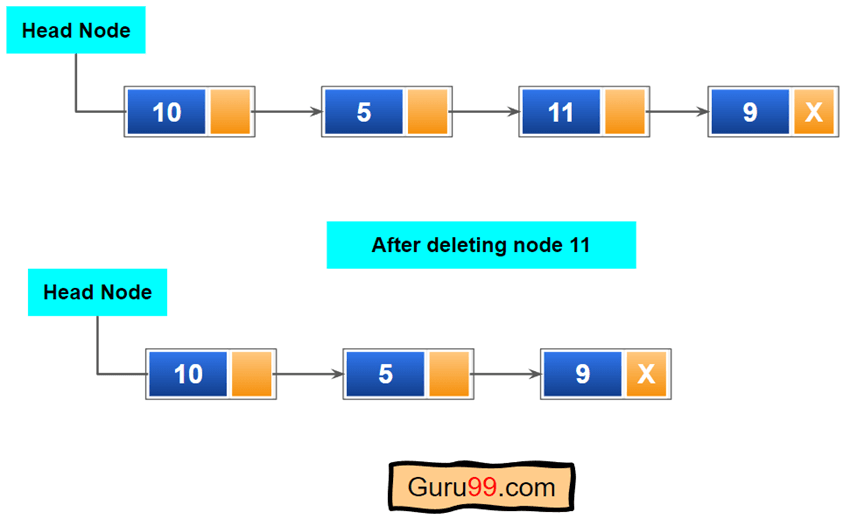
此函数有两个任务:搜索和删除。我们需要搜索直到单向链表结束。如果我们找到任何匹配的节点,我们将删除它。之后,我们需要合并或链接已删除节点的左右节点。以下是执行此操作的步骤
步骤 1) 遍历到链表末尾。检查当前节点是否等于搜索节点。
步骤 2) 如果找到匹配的节点,请将节点指针存储到当前节点。
步骤 3) 前一个节点的“next”将是当前节点的下一个节点。
步骤 4) 删除并释放当前节点的内存。
从单向链表中搜索并删除节点的伪代码
function searchAndDelete( head, searchItem ):
	while head.next.next is not NULL  and head.next.value is not equals searchItem :
		head = head.next
	head.next = head.next.next
	delete(head.next)
遍历单向链表
单向链表仅提供从头到尾的遍历功能。没有指向前一个节点的指针,因此我们无法反向遍历单向链表。我们将遍历每个节点并打印当前节点的值,直到遇到 null。
以下是步骤
步骤 1) 遍历每个节点,直到下一个节点为 null。
步骤 2) 打印当前节点的值。
遍历单向链表的伪代码
function traverse( head ):
		while head.next is not NULL:
			print the value of the head
			head = head.next
C++ 中的单向链表示例
#include<iostream>
using namespace std;
struct Node{
  int data;
  struct Node *next;
};
void insertAtHead(Node* &head, int value){
  Node* newNode = new Node();
  newNode->data = value;
  newNode->next = NULL;
  if(head!=NULL){
    newNode->next = head;
  }
  head = newNode;
  cout<<"Added "<<newNode->data<<" at the front"<<endl;
}
void insertEnd(Node* &head, int value){
  if(head==NULL){
    insertAtHead(head,value);
  }
  Node* newNode = new Node();
  newNode->data = value;
  newNode->next = NULL;
  Node *temp = head;
  while(temp->next!=NULL){
    temp = temp->next;
  }
  temp->next = newNode;
  cout<<"Added "<<newNode->data<<" at the end"<<endl;
}
void searchAndDelete(Node **headPtr, int searchItem){
  Node *temp = new Node();
  if( (*headPtr)->data == searchItem ){
    temp = *headPtr;
    *headPtr = (*headPtr)->next;
    free(temp);
  }else{
    Node *currentNode = *headPtr;
    while(currentNode->next != NULL){
      if(currentNode->next->data == searchItem){
        temp = currentNode->next;
        currentNode->next = currentNode->next->next;
        free(temp);
      }else{
        currentNode = currentNode->next;
      }
    }
  }
  cout<<"Deleted Node\t"<<searchItem<<endl;
  return;
}
void insertAfter(Node * &headPtr, int searchItem, int value){
  Node* newNode = new Node();
  newNode->data = value;
  newNode->next = NULL;
  Node *head = headPtr;
  while(head->next!=NULL &&  head->data!=searchItem){
    head = head->next;
  }
  newNode->next = head->next;
  head->next = newNode;
  cout<<"Inserted "<<value<<" after node\t"<<searchItem<<endl;
}
void insertBefore(Node * &headPtr, int searchItem, int value){
  Node* newNode = new Node();
  newNode->data = value;
  newNode->next = NULL;
  Node *head = headPtr;
  while(head->next!=NULL &&  head->next->data!=searchItem){
    head = head->next;
  }
  newNode->next = head->next;
  head->next = newNode;
  cout<<"Inserted "<<value<<" before node\t"<<searchItem<<endl;
}
void traverse(Node *headPointer){
  Node* tempNode = new Node();
  tempNode = headPointer;
  cout<<"Traversal from head:\t";
  while(tempNode !=NULL){
    cout<<tempNode->data;
    if(tempNode->next)
      cout<<" --> ";
    tempNode = tempNode ->next;
  }
  cout<<endl;
}
int main(){
  Node *head = NULL;
  insertAtHead(head,5);
  insertAtHead(head,6);
  insertAtHead(head,7);
  insertEnd(head,9);
  traverse(head);
  searchAndDelete(&head,6);
  traverse(head);
  insertAfter(head,7,10);
  insertBefore(head,9,11);
  traverse(head);
}
输出
Added 5 at the front
Added 6 at the front
Added 7 at the front
Added 9 at the end
Traversal from head:    7 →  6 →  5 →  9
Deleted Node    6
Traversal from head:    7 →  5 →  9
Inserted 10 after node  7
Inserted 11 before node 9
Traversal from head:    7 →  10 →  5 →  11 →  9
Python 程序中的单向链表示例
class Node:
  def __init__(self,data = None, next = None):
    self.data = data
    self.next = next
class SinglyLinkedList:
  def __init__(self):
    self.head = None
  def insertAtHead(self, value):
    newNode = Node(data=value)
    if self.head is not None:
      newNode.next = self.head
    self.head = newNode
    print(f'Added {newNode.data} at the front.')
    return
  def insertAtEnd(self,value):
    if self.head is None:
      self.insertAtHead(value)
    newNode = Node(value)
    temp = self.head
    while temp.next is not None:
      temp = temp.next
    temp.next = newNode
    print(f'Added {newNode.data} at the end.')
  def searchAndDelete(self,searchItem):
    temp = Node()
    if self.head is searchItem:
      temp = self.head
      self.head = self.head.next
    else:
      currentNode = self.head
      while currentNode.next is not None:
        if currentNode.next.data is searchItem:
          temp = currentNode.next
          currentNode.next = currentNode.next.next
        else:
          currentNode = currentNode.next
    print(f'Deleted node\t{searchItem}')
    return
  def insertAfter(self,searchItem,value):
    newNode = Node(data=value)
    temp = self.head
    while temp.next is not None and temp.data is not searchItem:
      temp = temp.next
    newNode.next = temp.next
    temp.next = newNode
    print(f'Inserted {value} after node\t{searchItem}')
    return
  def insertbefore(self,searchItem,value):
    newNode = Node(data=value)
    temp = self.head
    while temp.next is not None and temp.next.data is not searchItem:
      temp = temp.next
    newNode.next = temp.next
    temp.next = newNode
    print(f'Inserted {value} before node\t{searchItem}')
    return
  def traverse(self):
    temp = self.head
    print("Traversing from head:\t",end="")
    while temp:
      print("{}\t".format(temp.data),end="")
      temp = temp.next
    print()
SinglyLinkedList = SinglyLinkedList()
SinglyLinkedList.insertAtHead(5)
SinglyLinkedList.insertAtHead(6)
SinglyLinkedList.insertAtHead(7)
SinglyLinkedList.insertAtEnd(9)
SinglyLinkedList.traverse()
SinglyLinkedList.searchAndDelete(6)
SinglyLinkedList.traverse()
SinglyLinkedList.insertAfter(7,10)
SinglyLinkedList.insertbefore(9, 11)
SinglyLinkedList.traverse()
输出
Added 5 at the front.
Added 6 at the front.
Added 7 at the front.
Added 9 at the end.
Traversing from head:   7       6       5       9
Deleted node    6
Traversing from head:   7       5       9
Inserted 10 after node  7
Inserted 11 before node 9
Traversing from head:   7       10      5       11      9
单向链表的复杂度
有两种复杂度:时间复杂度和空间复杂度。单向链表的最好、平均和最坏情况时间复杂度是相同的。
最好情况下的时间复杂度:
- 头部插入可以在 O(1) 内完成。因为我们不需要遍历链表内部。
- 如果搜索元素存在于头节点,则搜索和删除操作可以在 O(1) 内完成。
平均情况下的时间复杂度
- 如果单向链表中存在“n”个元素,则在链表内插入需要 O(n)。
- 搜索和删除也可以是 O(n),因为搜索元素可能存在于尾节点。在这种情况下,您应该遍历整个列表。
单向链表的空间复杂度
单向链表动态分配内存。如果要存储 n 个元素,它将分配 n 个内存单元。因此,空间复杂度为 O(n)。
